📌 UPDATE — May 30, 2026
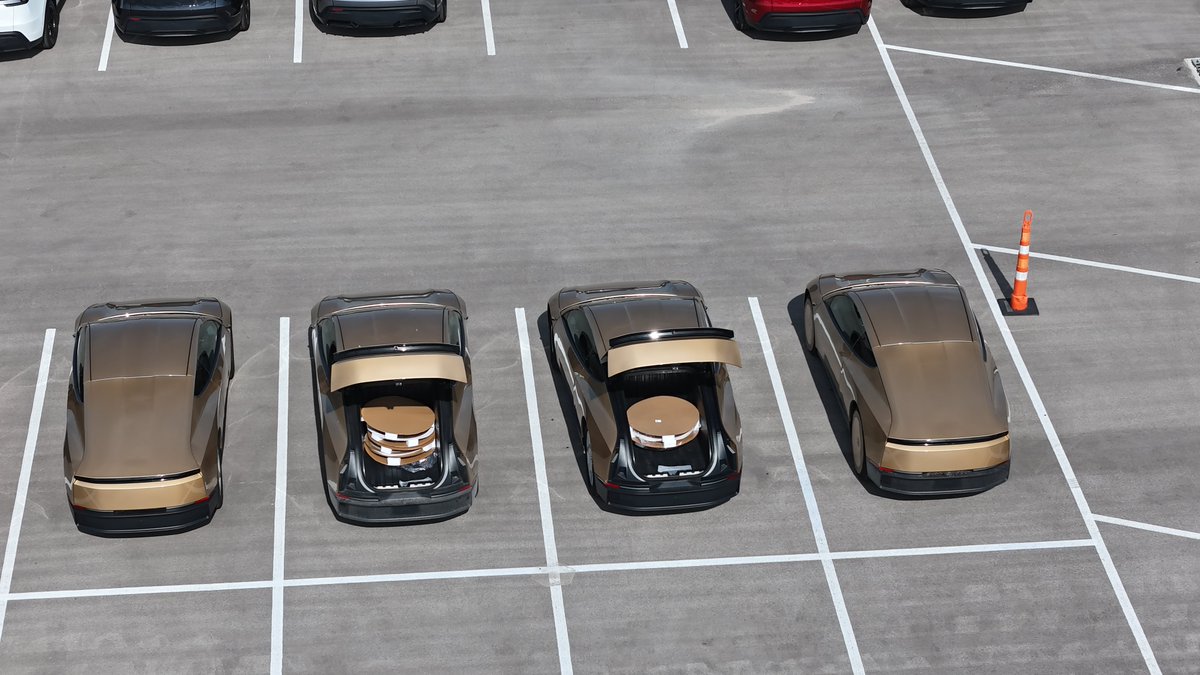
Fresh footage from Giga Texas on May 29 shows Cybercabs actively rolling out of the factory floor and staging in outbound lots ahead of transport pickup — a strong visual signal that production is ramping in earnest. Several units were spotted with hatches open, suggesting final inspection or prep work is happening right on the lot. Aerial observer Joe Tegtmeyer also noted that construction is progressing across four major sites at the Austin gigafactory simultaneously. Combined with Tesla's recently self-certified Level 4 license, these sightings suggest the Austin robotaxi rollout is moving from paperwork to pavement fast.

Two milestones landed within 24 hours of each other, and together they mark the clearest sign yet that Tesla's Cybercab program has crossed from development into deployment. Tesla has officially self-certified its robotaxi software as Level 4 autonomous under a new Texas commercial autonomous vehicle law that became enforceable on May 28, 2026 — and fresh footage from Giga Texas shows Cybercabs driving themselves off the production line and completing the roughly 2-mile trip to the West End-of-Line facility without a human at the wheel.

What the Level 4 License Actually Means
Level 4 autonomy is not a marketing label — it's a defined SAE classification meaning the vehicle can handle all driving tasks within a specific operational domain without any human intervention. A Level 4 system can legally ignore a request to take over; if conditions fall outside its design domain, it stops safely rather than handing control back to a driver.
Texas's new commercial autonomous vehicle law, which became enforceable on May 28, 2026, allows companies to self-certify their software against the Level 4 standard to operate commercial robotaxi services in the state. Tesla completing that self-certification is the regulatory green light the Cybercab program needed to move from testing to revenue-generating rides in Texas. This is not a permit to test — it's a license to operate commercially.
Cybercabs Are Already Moving Themselves
The regulatory news doesn't exist in a vacuum. Aerial footage captured by Joe Tegtmeyer shows Cybercabs leaving the Giga Texas production line exit point and navigating the approximately 2-mile route to the West End-of-Line (EOL) facility autonomously — no safety driver, no remote operator visible. This is a meaningful operational detail: Tesla is using its own FSD stack to move freshly built vehicles through a real-world route as part of the manufacturing process itself.
Running production vehicles autonomously through an on-site route serves a dual purpose. It functions as a final validation step — every Cybercab effectively completes a live autonomous drive before it ever reaches a customer. And it means Tesla is accumulating real-world Level 4 miles at scale from day one of production, not just in a test fleet.
Why Texas First
Texas has consistently been the most permissive U.S. state for autonomous vehicle deployment, with legislation that favors self-certification over prescriptive agency approval. That regulatory environment, combined with Giga Texas being Tesla's primary Cybercab manufacturing site, makes the Austin area the logical first commercial market. The proximity of production to the initial deployment zone also simplifies logistics during the ramp — vehicles can go from the line to a commercial fleet without leaving the region.
For Tesla owners and prospective Cybercab riders, the combination of a valid commercial license and autonomous production-line operation suggests the timeline to public availability in Texas is measured in weeks, not quarters. The regulatory hurdle is cleared. The vehicles are building and moving. What comes next is fleet scaling and the commercial launch itself.

Sarah focuses on Tesla Energy, SpaceX missions, and the broader Musk AI portfolio. Former data analyst in clean energy. Based in San Francisco.
Sources verified at publish time. Spotted an inaccuracy? Email editorial@basenor.com.