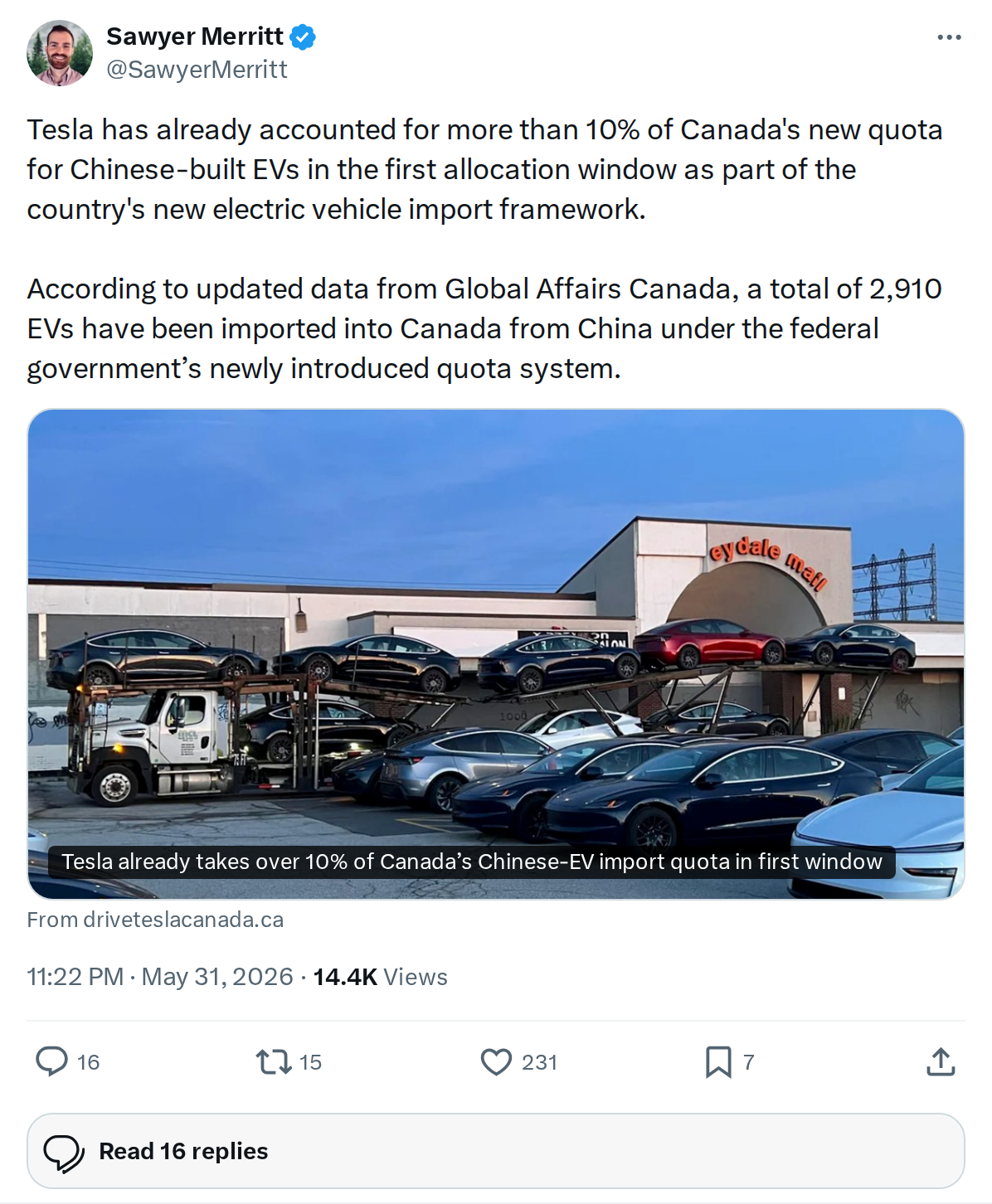
Tesla has moved quickly to capitalize on Canada's new low-tariff import framework for Chinese-built electric vehicles, already accounting for more than 10% of the country's first allocation window. According to updated data from Global Affairs Canada, 2,910 vehicles have been imported under the quota as of May 29 — and Tesla's Shanghai-built Model 3 is driving virtually all of that volume.

How the Quota Works
Canada struck a deal in January 2026 to replace a punishing 100% surtax on Chinese-made EVs with a structured quota system. Under the new framework, up to 49,000 Chinese-built EVs per year can enter at a reduced 6.1% most-favored-nation tariff rate. The system went live in March 2026.
The first allocation window runs from March 1 to August 31, 2026, covering 24,500 vehicles issued on a first-come, first-served basis. With 2,910 vehicles imported so far, that's roughly 11.9% of the initial half-year tranche already spoken for — and Tesla got there first.
First Allocation Window — Utilization
2,910 of 24,500 vehicles imported (11.9%) • Source: Global Affairs Canada, as of May 29, 2026
What Tesla Is Bringing In
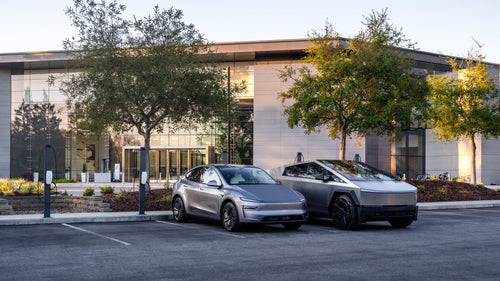
The vehicles entering under this quota are Shanghai-built Model 3 Premium RWD sedans, priced at C$39,490 before destination and delivery charges. There's a meaningful asterisk for buyers, though: these units are not eligible for the federal C$5,000 Electric Vehicle Affordability Program (EVAP) rebate, because China is not a free-trade partner country. Quebec is the exception — the province has made the variant eligible for a C$2,000 provincial rebate.
For Canadian Model 3 shoppers, that rebate gap is a real consideration. The Shanghai-built variant comes in at a competitive base price, but the missing federal incentive narrows the effective savings compared to domestically produced alternatives.
The Competitive Landscape Ahead
Tesla won't hold this ground unopposed for long. According to verified data from Global Affairs Canada, early shipments from other manufacturers are already appearing in the import records — 18 Lotus Eletre units and approximately 150 Chery vehicles, the latter primarily for certification and testing purposes. BYD and Geely are also expected to enter the Canadian market through this framework.
Canadian officials are actively debating whether to impose per-automaker volume caps to prevent any single company from dominating the quota. That conversation is directly relevant to Tesla's current lead position. If caps are introduced, Tesla's first-mover advantage could be structurally limited regardless of demand.
Looking further out, the annual quota is projected to grow to 70,000 vehicles by 2030. Starting in 2027, a rising share of that quota will be reserved for vehicles priced at C$35,000 or less — reaching 50% of the total by 2030. At C$39,490, the current Shanghai Model 3 sits above that threshold, which means Tesla will need to either reprice or introduce a lower-cost variant to remain competitive in the quota's later years.
Why This Matters Beyond Canada
This is a relatively small volume story in absolute terms — under 3,000 vehicles — but it's strategically significant. Canada's quota framework is one of the first structured Western market openings for Chinese-built EVs since the tariff wave of 2024-2025, and Tesla's ability to move product through it quickly demonstrates how effectively Gigashanghai can serve markets beyond China when trade conditions allow. How Ottawa manages the quota going forward — caps, price tiers, partner-country rules — will set a template that other markets may follow.

David covers the EV industry, regulatory developments, and accessory ecosystem. 15+ years writing about consumer tech. Based in London.
Sources verified at publish time. Spotted an inaccuracy? Email editorial@basenor.com.