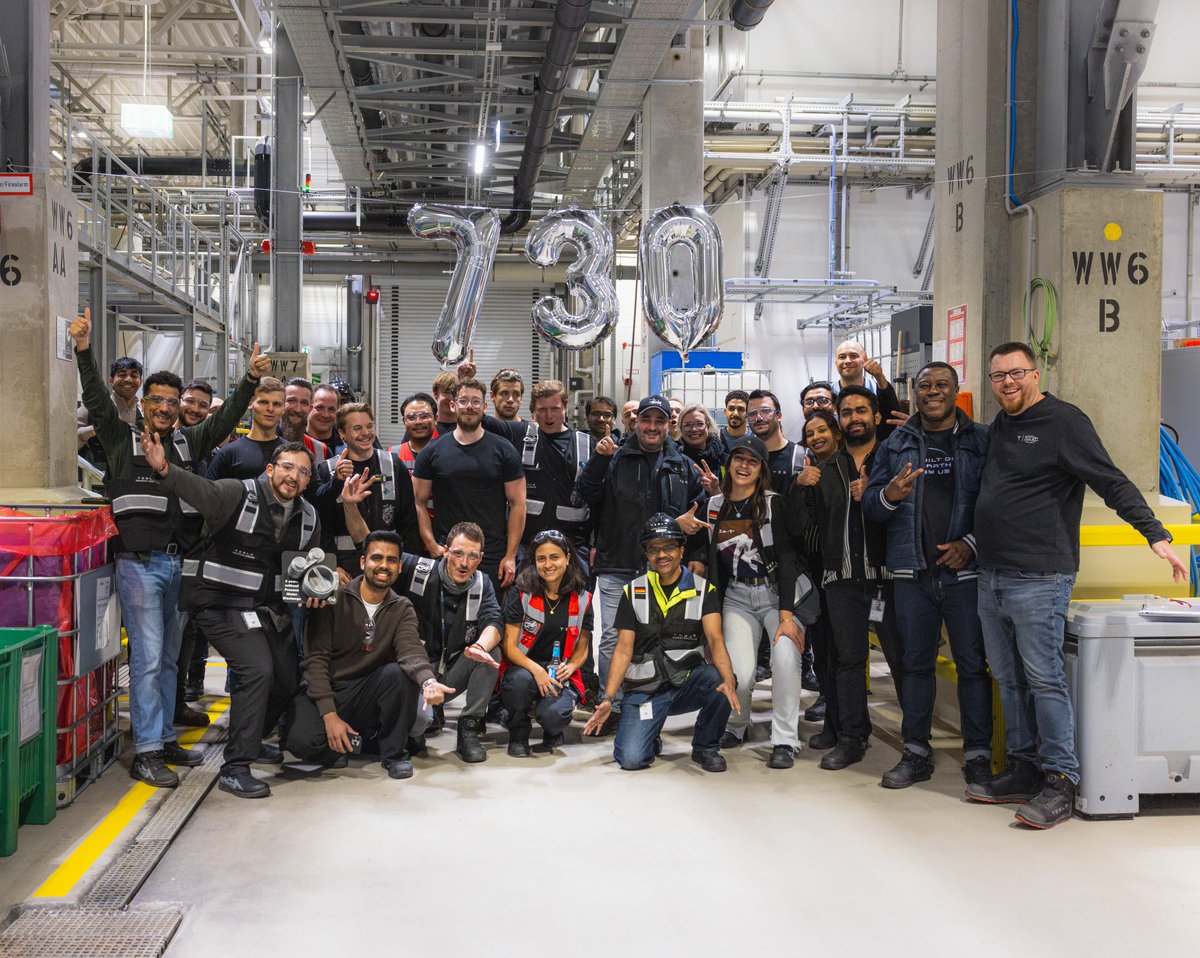
Tesla's Gigafactory Berlin-Brandenburg has quietly become one of the most water-efficient car plants in Germany — and a new milestone makes that case in hard numbers. As of November 2026, the factory has completed two consecutive years of 100% process wastewater recycling, returning 465 million liters back into its own production cycle without discharging into the municipal sewer system.

What exactly is 'process wastewater' — and why does recycling it matter?
Process wastewater is the water used directly in manufacturing operations: cooling systems, paint shops, battery component washing, and other industrial processes. It's chemically distinct from general facility wastewater and typically requires treatment before it can be reused or released. Most car factories treat it and discharge it into the municipal system. Giga Berlin instead treats it on-site and feeds it back into the production line — meaning the same water does more work before it ever leaves the facility. Over two years, that loop has kept 465 million liters from ever needing to be drawn fresh from local water sources.
How does the recycling system actually work?
Giga Berlin operates what is recognized as one of the largest industrial wastewater treatment plants in Germany. The on-site facility processes contaminated water from manufacturing, removes industrial byproducts, and returns treated water to production use. According to Tesla's 2025 Impact Report, the factory consumed approximately 0.3 million cubic meters of water in 2025 — a 33% reduction from 0.45 million cubic meters the year before. That efficiency gain is a direct result of the closed-loop recycling approach, not just conservation measures.
How does Giga Berlin's water use compare to the rest of the auto industry?
The numbers are striking. According to Tesla's own reporting, Giga Berlin used 2.16 cubic meters of water per vehicle produced in 2024, against an industry average of 3.50 cubic meters per vehicle. That's roughly 38% less water per car than the typical plant. The gap has likely narrowed further given the additional efficiency gains recorded in 2025. For a factory producing vehicles at scale in the water-sensitive Brandenburg region — where local water supply has historically been a point of community concern — that efficiency margin carries real weight.
Didn't Tesla have disputes with local authorities over water use?
Yes, and the resolution tells its own story. Early in Giga Berlin's operation, water usage projections drew scrutiny from the Strausberg-Erkner Water Association (WSE), which manages the regional supply. By September 2025, Tesla had voluntarily returned 377,000 cubic meters of annual water rights back to the WSE — rights it had originally secured but no longer needed because actual consumption came in so far below initial forecasts. Using just 21% of its permitted annual water ceiling in 2025, the factory essentially outperformed its own environmental commitments.
When did this program start, and how has it progressed?
The zero-discharge program began in earnest around November 2024. Andre Thierig, Giga Berlin's Senior Director of Manufacturing, publicly marked the first full year of zero process wastewater discharge in November 2025. The two-year milestone announced today extends that unbroken record through November 2026. The 465 million liters figure represents the cumulative volume recycled across both years — a number that will keep growing as long as the system runs.
Does this have any relevance for Tesla's other factories?
It sets a template. Giga Berlin's water performance is now documented in Tesla's Impact Report as a benchmark, and the underlying treatment infrastructure is replicable. Tesla's other gigafactories — in Texas, Nevada, Shanghai, and the planned facilities beyond — all operate in regions where water access and environmental permitting are live issues. A proven closed-loop model that demonstrably reduces consumption by a third year-over-year is exactly the kind of data that accelerates permitting and builds community trust in new markets. Whether Tesla moves to replicate the Berlin approach elsewhere hasn't been confirmed, but the two-year track record makes the case hard to ignore.
Related Gear
Gear up your Tesla with tested, custom-fit BASENOR accessories — shop Tesla accessories →
Sources & reporting notes
The links below identify the material source records used for this report.
- @gigafactories on X (2026-11-05T16:34:33.000Z) — Direct source
Source links are preserved as published or accessed. See our editorial standards and corrections policy.
The BASENOR Editorial Desk covers Tesla, SpaceX, and related technology, curating reporting from primary sources — official accounts, regulatory filings, and software release data. Every article passes source-record and fact-checking review before publication. About the newsroom.
This report was curated by the BASENOR Editorial Desk from the sources listed above. Read our editorial standards or email editorial@basenor.com to report an error.